



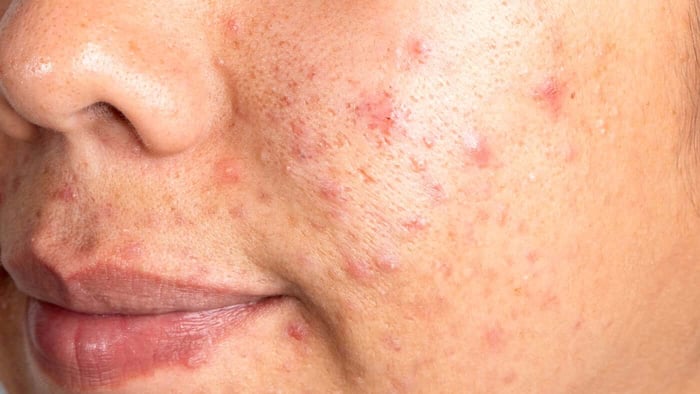
A common food that people point to as an acne trigger is chocolate. But the reality is that chocolate itself does not really cause breakouts. Rather, it’s ingredients like sugar and dairy that can cause breakouts.
Diet and other lifestyle habits can have a direct effect on acne breakouts. Stress and a lack of sleep can also have adverse effects on your skin.
Lifestyle habits and acne
Diet
As mentioned above sugary foods are amongst the types that can trigger breakouts. Foods high in sugar are known as high glycemic foods which trigger a spike in blood sugar that then causes inflammation in the body. On top of that high glycemic foods trigger excess sebum and that’s where the acne trigger comes in. Excess sebum can clog up pores leading to breakouts.
Other foods that fall under the high glycemic label include: donuts, fries, potato chips, white bread, and sugary drinks. A healthy level of moderation is advised to help prevent potential acne breakouts.
However, while low glycemic foods can lead to fewer breakouts it is important to note that the American Academy of Dermatology has stated that there is still more research needed to establish the connection between high glycemic foods and acne.
Ultimately, to determine whether high glycemic foods negatively affect your skin, it’s important to observe how these kinds of foods affect you. For instance, after eating lots of this kind of food do you notice a jump in acne breakouts? Or, alternatively if you switch to a low glycemic food diet do you notice fewer breakouts? It can vary person-to-person.
Stress
Stress can also be a trigger for acne—but not always. Continued stress may cause acne breakouts due to heightened levels of cortisol. Cortisol can trigger the overproduction of sebum which when mixed with dead skin cells and bacteria in the skin can lead to breakouts.
While it may be difficult to completely control what is causing your stress there are methods to help control it, including calming activities like keeping a journal, deep breathing exercises, and keeping up with activities you enjoy. It can also help to cut back on foods or drinks that can spike stress like caffeine.
Lack of sleep
Much like stress, a lack of sleep can trigger spikes in the hormone cortisol. And as we know cortisol triggers excess sebum which then causes breakouts.
But, another major factor that is impacted by a lack of sleep is our skin’s ability to repair itself. While we sleep the skin works to repair itself from stressors like environmental irritants. So, when you have a constant lack of sleep your skin does not have the opportunity to repair itself as needed. This can result in a weakened skin barrier that is less effective at protecting the skin from acne-causing factors.
It's beneficial also to your overall health to keep a regular sleep schedule, not just to prevent acne triggered by a lack of sleep.
On top of keeping up with a healthy diet, stress management, and a regular sleep schedule, you can also help treat acne through a regular skin routine.
A simple everyday routine:
Whether your acne is caused by the factors listed above or a number of other factors, keeping up a regular skincare routine can also help keep your skin protected.
Step 1: Cleanser
Prep the skin for the rest of your routine with a cleanser that is best for your skin type. This could be a creamy cleanser for dry or sensitive skin or a foaming cleanser for oily, acne prone skin.
Step 2: Acne treatment
When breaking out, keeping up with an acne treatment can help control the appearance of breakouts. This can be a salicylic acid treatment and/or a retinoid. If you use both types of treatments, you can cycle them in your routine by using your retinoid one night and your exfoliant another night to prevent irritating or drying out the skin.
Step 3: Moisturizer
Keeping your skin hydrated and nourished is vital to help support the skin barrier. The skin barrier helps keep the skin protected from bacteria or other external factors that may lead to acne breakouts.
Step 4: Sunscreen
Another vital step that helps keep the skin barrier healthy is sunscreen. Sun damage can compromise the skin barrier, so applying sunscreen daily is essential to support the skin barrier’s role.
While these are the basic steps to a daily skincare routine, the types of products you use may vary on your skin type. So, when choosing your products ensure that they won’t clash with your skin type to prevent unwanted irritation.