


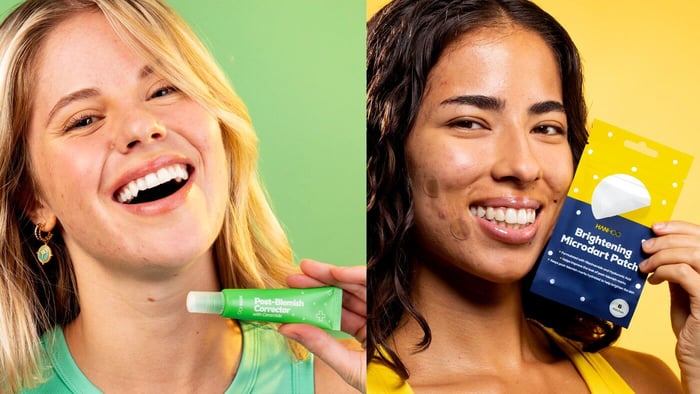
If you deal with acne then you may also unfortunately deal with post-blemish marks. Sometimes dealing with acne breakouts is just half the battle. Once a pimple or cluster of pimples are gone you can also potentially deal with post-blemish marks left behind.
What do post-blemish marks look like?
Post-blemish marks are often referred to as dark spots. But, dark spots are not the only type of post-blemish marks. Dark spots are what is known as post-inflammatory hyperpigmentation and it usually pops up in darker skin tones. However, some post-blemish marks present as pinkish to red spots. These types of spots are known as post-inflammatory erythema and will pop up in lighter skin tones.
Are post-blemish marks and acne scars the same?
Some people may think that post-blemish marks also refer to acne scars but they are pretty distinct in appearance. Post-blemish marks are discolored, flat spots whereas acne scars can be textured and rough. An example of an acne scar is what is known as “ice pick” acne scars which are known as such because it looks like a tiny ice pick left a small hole in the skin.
Acne scars can be tough to treat with topicals since they have altered the texture of the skin. Severe acne scarring can also be better treated by in-office treatments via your dermatologist.
Post-blemish marks may not always require such drastic treatment and there are lots of treatments that you can get over the counter.
What helps with post-blemish marks?
There are a number of skincare ingredients that can help improve skin tone to reduce the look of post-blemish marks, which you can find in a variety of skincare products from creams, serums, and even sunscreens.
Niacinamide
Niacinamide is a multi-functional ingredient as it works to improve skin tone, fade discoloration, balance sebum, and boost the skin barrier.
When it comes to post-blemish marks, Niacinamide prevents the transfer of melanin to skin cells thereby helping to prevent discoloration and treat existing post-blemish marks. And as a bonus since Niacinamide helps balance the production of sebum (one of the culprits of acne breakouts), you may also experience fewer breakouts as well.
Tranexamic Acid
Much like Niacinamide, Tranexamic Acid also targets discoloration and improves skin tone. And it also helps in a similar way to Niacinamide by interrupting the transfer of melanin to help treat and prevent hyperpigmentation.
Vitamin C
One of the more popular ingredients you can find in a dark spot serum is Vitamin C. Vitamin C inhibits melanin to brighten the skin, provide antioxidant protection, and supports collagen.
Retinol
Another multi-functional ingredient in the skincare space is Retinol. Known to exfoliate, smooth fine lines, and improve tone, Retinol targets not only post-blemish marks but also the acne that can lead to such marks.
Sunscreen
While not a specific ingredient, all types of sunscreen can help manage post-blemish marks. The type of sunscreen ingredient will ultimately depend on your preference, mineral or chemical.
Exposure to the sun without proper sun protection can make post-blemish marks appear darker in color, so it stands to reason that sunscreen can help manage post-blemish marks and prevent them from worsening.
Where to find these ingredients in Hanhoo products:
Brightening Microdart Patch

Our Brightening Microdart Patch contains 2% Niacinamide to help fade the look of post-blemish marks. Plus the Hyaluronic Acid and Madecassoside in the patch helps keep the skin hydrated. Made with over 165 microdarts to better reach the problem spot and help brighten the skin.
Apply the patch to the post-blemish mark 2 to 3 times a week for at least 2 weeks to see visible results.
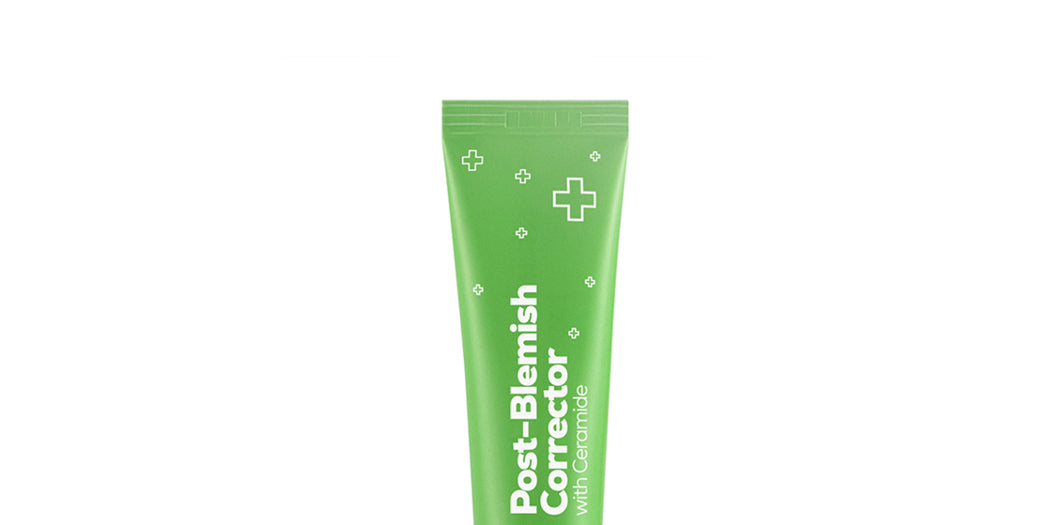
Post-Blemish Corrector

While the Brightening Microdart Patch may be better suited for overnight use, our Post-Blemish Corrector is a gel-serum formula that is best used during the day and sits well under makeup.
The Post-Blemish Corrector is formulated with Ceramide, 3% Niacinamide and 2% Tranexamic Acid to treat both dry spots and discolored spots left behind by acne. The combination of both brightening ingredients helps improve skin tone while ingredients like Aloe and Ceramide restore and hydrate the skin.
Lastly…
Ultimately, no matter what post-blemish treatment you decide to use, none will matter unless used in tandem with sunscreen. UV protection is important to prevent the sun from darkening any discoloration. In short, you cannot expect to treat discoloration with a serum or cream without also using sunscreen during the day.